Competence
Compelling characters need to be good at something.

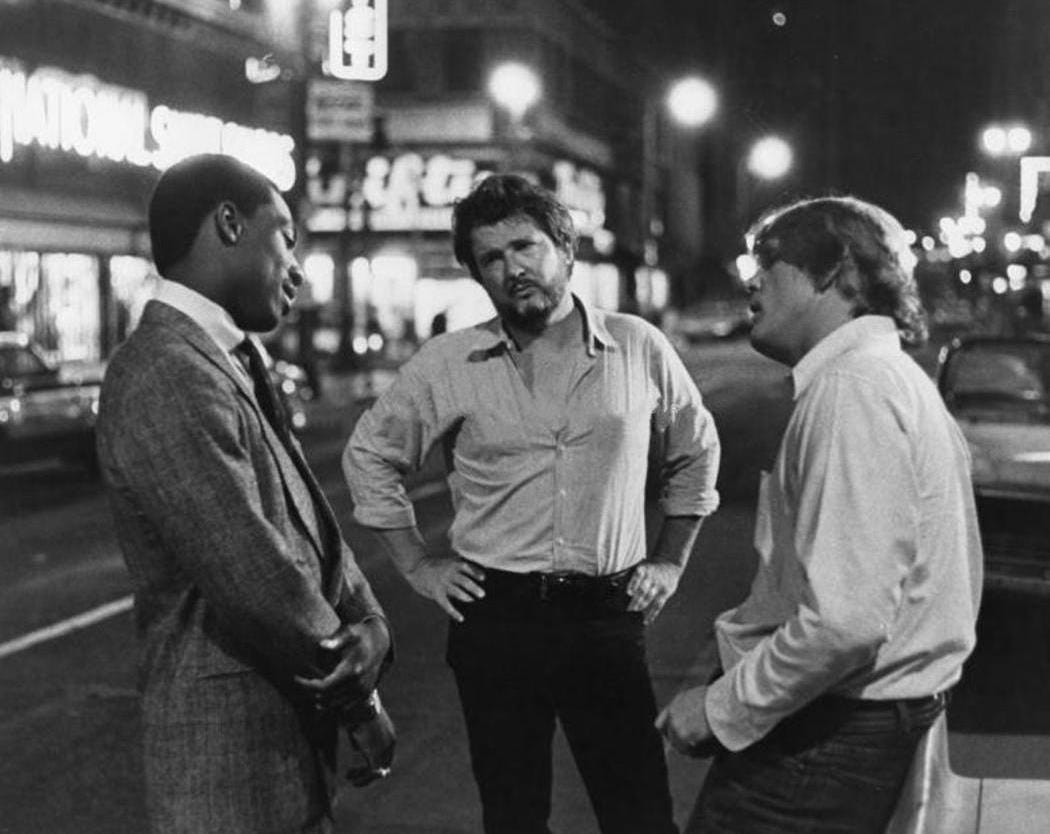
There’s a running joke in our household inspired by my unconditional love for the movie Heat. It started when my wife found out that I was listening to a podcast called One Heat Minute, where a bunch of rambunctious Aussies examine the film chronologically, in one-minute segments. That tallies to 170 episodes, each about twenty to thirty minutes long. Her (justifiable) question in response to this revelation was: “why do men like films like Heat so much that they would want to listen to podcasts like this?” To which my answer was, and remains, that there are few pleasures greater than watching competent people do things well. And Heat satisfies this desire on every single level. Not just its story, which is note perfect, but in its execution. De Niro, Pacino et al all at the peak of their powers. Michael Mann’s commitment to verisimilitude driving him to stage what still stands as the greatest shootout in the history of film on the streets of Downtown Los Angeles. A scene so well-made that Val Kilmer’s reload of his carbine is still shown in military training videos as the standard to beat. And that’s just the obvious stuff. Heat is excellent on every single level. I’ve used Jon Voight’s performance - which adds up to less than ten plus minutes of screen time - as a teaching tool for actors and directors for over ten years. There is literally nothing about Heat that needs improving. So the reason I can watch and rewatch it over and over again is it offers me that sublime, thrilling and completely satisfying escape into pure excellence that I crave, and need. I will explain why in a bit.
I think it applies to more than films, obviously. It extends beyond entertainment, into absolutely anything. Music, DIY videos, sports, off-road car trials, sheep dog training. But in films, and in film scripts, I think it remains a sometimes overlooked and under-appreciated pillar around which we build compelling characters.
In our Swiss life, we’ve been sampling some local TV. There’s a series called Tschugger, which translated basically means ‘Cops’. The show is created by and stars David Constantin, who was kicked out of the military for secretly filming his superiors and posting it online. He’s a likeable, mischievous and clearly talented entertainer. The production values on the show are first rate. The location - the Valais, where I live - is stunningly shot, and they have infused the design with a kind of retro-seventies vibe, despite its contemporary setting. For the first few episodes, it’s very watchable.
However, about half way through season one we started to flag. What plot there is chugs along well enough to drive the story. There are some genuinely funny moments too. But what starts to grate is how shit the hero - and his partner - are at being cops. What starts off as amusing soon becomes tiresome. In fact no one in the show is especially good at what they do, which is a sort of in-joke round here as the Valais is caricatured, by the rest of Switzerland, to be the sort of redneck capital of the Federation. But it doesn’t satisfy. And I really wanted it to, because I really love action comedies. Especially where crime is involved.
Watching Tschugger, I think of 48 Hours, Midnight Run and more recently, the early seasons of Brooklyn 99 on TV. All of which in their own way subverted or sent up cop/crime tropes, but the difference being are each populated with characters who are good at something.
In the first act of 48 Hours, Nick Nolte’s gruff and somewhat old-school cop accompanies two of his colleagues (including a young Jonathan Banks) to what seems like a fairly routine callout at a seedy-ish San Francisco hotel. Up to this point we have only seen Nolte treat his girlfriend poorly, grunt and scoff amongst to his co-workers. So far, no reason to especially root for him, other than the fact that he’s Nick Nolte and automatically watchable.
But then Banks and the other cop are ambushed. Nolte, still in reception, hears gunshots and suddenly all traces of his trademark grizzly humour vanish. He tells the receptionist to call for help and storms upstairs, gun drawn. The ensuing sequence is masterful. Acting, directing, editing are all astonishing. The film was made with the fumes of the ‘70s still hovering, so the acting is real, dense, in service to the story. The action is tight, brutal, swift, real. Nolte reaches the floor where the shots were fired. Jonathan Banks stumbles out of a doorway, pale, bleeding, and utters the single sentence: “Jack, there’s two of ‘em Jack.” Not “Call an ambulance I’m bleeding out here” or “stay with me I’m fucking terrified”. He selflessly gives Jack (Nolte) the information he needs. A high-pitched drone kicks in and Nolte, without hesitation, goes in pursuit of the cop-killers.
Plenty more happens, but the point to be made here is that under the umbrella of ‘action-comedy’, the filmmaker - in this case the legendary Walter Hill - waste no time in securing our confidence in our hero through a straightforward, unequivocal display of his courage and skill under fire. From the second Nolte hears the shots, he switches with absolute precision to a focused, committed and skilled police detective. And it matters because we need to have someone to root for for the film to sustain. Especially when Hill introduces the wild card, Eddie Murphy in his movie debut. Murphy blows up the whole film, bringing epic charisma, timing and, yes, competence. The scene where he takes Nolte’s badge and takes control of an all-white redneck bar is done with so much panache that he manages to overcome Nolte’s sloppy, racist cynicism (and the audience’s too), to plant himself as one of the greatest, maybe the greatest screen comedian of his generation. And he does it by being competent as a character and as a performer. From this moment on we are eating out of his hand.
Which is not to say that competency should be conflated with flawlessness. The plot of Heat is triggered by a strategic error made by De Niro when he hires the impulsive (and as it turns out homicidal) Waingro to assist on a heist, only then to lose him when they try to rectify this error. In 48 Hours Nolte is out-gunned and out-manoeuvred when the bad guys take a hostage, forcing him to put down his weapon and let the criminals escape. But the thrill of these stories is watching highly competent people try and out-wit other, equally competent people. Or as my wife puts it: “dudes watching dudes doing things dudes are good at.”
There are exceptions to this. Fawlty Towers and The Office all elevate male incompetence, and they do it brilliantly. But these stories are not without competent characters to anchor the mayhem. Fawlty Towers has Connie Booth, the only truly sane (and competent) person in the entire madhouse. And in the case of the Office, especially the US version, the Jim/Pam story took on a life of its own. Both in their own charming way were highly competent, and as the series progressed, became its emotional centre.
Cut to March 2026 and the release of Louis Theroux’s new documentary, Inside The Manosphere. The film is mean to be some kind of exposé of this dark, but hugely prosperous, and dangerous, corner of the internet. In the aftermath of the massive success of Adolescence, the middle classes have woken up to the idea that abandoning their kids to fifteen hours of unregulated screen time a day might have been a bad idea. Especially in a world where the idea of male competence has been degraded, opening up a space for these ultra male cult leaders to move in and take over.
The rot probably set in when the new male stereotype took hold in the second half of the twentieth Century. In the 1950s America exported a vision of men going off to work and the women and children staying behind, comfortably supported by the man’s hard won success. It became a very powerful image that spread, like hamburgers, around the world. But behind this prosperous suburban fantasy lay a more insidious separation of the men from the family, swiftly giving birth to the ‘incompetent’ or ‘useless’ male archetype. Its roots of course lay in earlier decades, in a Victorian delineation of roles that Disney so beautifully rendered - and subverted - in Mary Poppins. The pompous patriarch oblivious to what is really going on around him. But by the 1950s, the office-bound male soon stopped being good at anything other than being office-bound. When ‘Buddy Boy’ Baxter gets the girl in Billy Wilder’s The Apartment, we only breathe a sigh of temporary relief. A wage slave like him will soon be moving out to the suburbs, where his wife and kids will slowly separate from him into their own unit, eye-rolling at how little he knows about the house, or their lives. In a few years he won’t even know where his socks go when they are dirty. I remember my own mother saying how religiously she would avoid supermarkets at weekends. “They are full of men just standing there, not knowing where anything is.”
My father was an exceptional pilot. He still holds the world record for a single engine flight to Australia. He once flew three of the Beatles. He was also an excellent carpenter. In addition to this, he loved photography, and as a teenager built, with his brother, an underwater camera housing so he could film marine life in the Bahamas, while holidaying out there.
But in the home he was distant and impatient. I knew he was good at stuff, but he mostly kept us away from these mysterious activities. I tried to do carpentry with him, but my clumsiness made him angry, so I stopped. I remember when I was about five or so, he started getting into hang gliding. He would leave at the crack of dawn. Because my sister had come along, my parents had moved me to sleep into his study, which faced the street. I would clamber to the window and religiously watch him set off, knowing that he was going somewhere to literally fly for a bit. I remember hearing him mention to my mother that he knew I watched him leave. But he never looked up to acknowledge me. He didn’t understand that all I wanted was proximity to him and this hidden world of adventure.
I think it might be the same for a lot of men. Robert Bly used to talk about the importance of young boys being physically close to their fathers, not so much to hang out, but just to experience them on a ‘cellular level’. Pre-industrialisation, it was a lot more likely for this to happen. Boys spent more time with their fathers, or other male elders, learning how to be men. But then the men started putting on ‘work clothes’ - in the case of my own father a pinstriped suit - and disappearing from the home for the entire day, only to return impatient and distracted, to be waited on by their wives, while children like me peeked through banisters or cracks in the door for a glimpse, for a brief moment of proximity. For cellular contact.
Which is why competent characters matter. I respond to competence because each and every one of these characters is, on a certain level, a piece of the father I craved. I know from my own experience as a father that my children want, need me to be competent. And when I fail to be, how quickly their trust is eroded.
And of course why it’s not only men who need to be good at things in stories. I hated Bridget Jones because audiences converted her incompetence into virtue and she became a national treasure.
Stories are vehicles through which we get to inhabit worlds elevated from our own. In Breaking Bad we see the broken, emasculated wage slave become a criminal mastermind and, in his own words, “the one who knocks.” In fact, Vince Gilligan, the show’s creator, has said many times that the modus operandi of the writer’s room was to engineer Walter into situations he could not possibly get out of. The result being they had to find ways for him to get out of them, however impossible, which in turn crystallised his competence into something iconic, and thrilling.
The extreme corners of the Manosphere are so tragic because they started out as exercises in promoting competence to young, impressionable men. But once monetisation became the goal, this idea got reduced to muscles, money and misogyny. Theroux’s documentary does little to help really understand why this is happening. But it’s clear that a lot of young men crave the kind of contact with a father that is, for whatever reason, denied them. Some of them will have ‘useless dads’, some no dads at all. So they go looking for the sturdy leadership they crave in all the wrong places, thanks to algorithms and, probably, neglect.
When I was ten years old my dad took me to Woking Football Ground to see Eddie Kidd, the motorbike stuntman, perform. I had been setting up ramps and other obstacles (even my poor sister) for my bike to fly over. Once a BMX came into my life, my daredevilry became even more extreme. My dad saw this, saw me for a moment, and booked us two tickets. I was in heaven. Eddie did not disappoint. He was handsome, brave, cool and highly skilled. He soared over buses, burst through flaming hoops, skidding to a halt, and absorbing the roars of approval from the crowd.
But if I’m really honest, seeing him perform at Woking Football Ground was truly meaningful for the two or so hours I spent side by side with my father, celebrating competence. Two dudes watching dudes doing things dudes are good at.
I can’t remember being happier.
I really enjoy reading your thinking Justin. I read the post a few times. Your work is another example of competence in action!
beautiful, love it J